ActiveFramePool implemented a LRU cache to keep tracking the most recent accessed key frames A key frame will be unloaded if it's not accessed for a while (at the end of cache list) The ActiveFramePool will be updated whenever Editor::scrubTo() gets called. More...
#include <activeframepool.h>
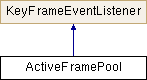
 Inheritance diagram for ActiveFramePool:
Public Member Functions | |
| void | put (KeyFrame *key) |
| void | clear () |
| void | resize (quint64 memoryBudget) |
| bool | isFrameInPool (KeyFrame *) |
| void | onKeyFrameDestroy (KeyFrame *) override |
Private Types | |
| using | list_iterator_t = std::list< KeyFrame * >::iterator |
Private Member Functions | |
| void | discardLeastUsedFrames () |
| void | unloadFrame (KeyFrame *key) |
| void | recalcuateTotalUsedMemory () |
Private Attributes | |
| std::list< KeyFrame * > | mCacheFramesList |
|
std::unordered_map< KeyFrame *, list_iterator_t > | mCacheFramesMap |
| quint64 | mMemoryBudgetInBytes = 1024 * 1024 * 1024 |
| quint64 | mTotalUsedMemory = 0 |
ActiveFramePool implemented a LRU cache to keep tracking the most recent accessed key frames A key frame will be unloaded if it's not accessed for a while (at the end of cache list) The ActiveFramePool will be updated whenever Editor::scrubTo() gets called.
Note: ActiveFramePool does not handle file saving. It loads frames, but never writes frames to disks.
Definition at line 33 of file activeframepool.h.
 1.8.6
1.8.6